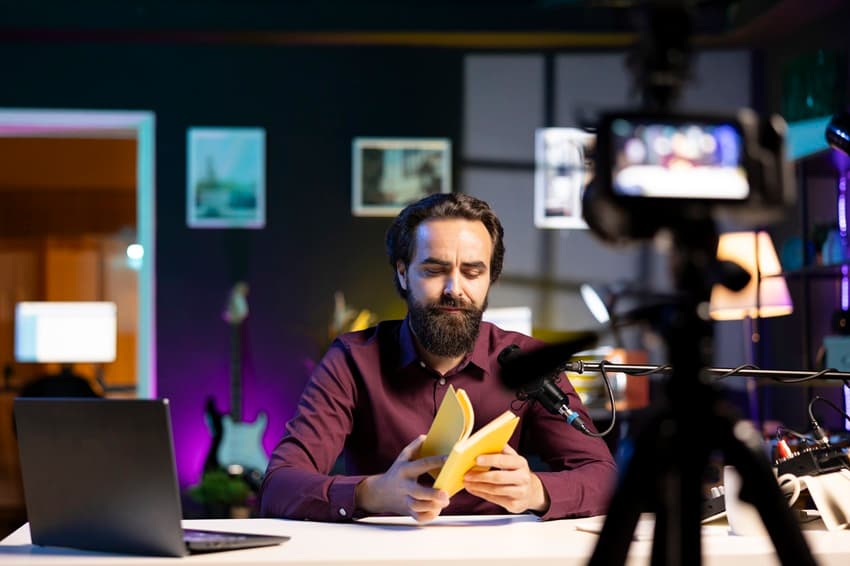
Episode flow matters more than production budget. That single idea explains why some creators with nothing but a phone and a simple setup are outperforming million-dollar productions.
Now, here’s what really matters. In 2025, attention is not given, it’s negotiated in seconds. People are not watching content the way they used to. They are scanning, skipping, deciding instantly.
The global digital space has shifted from passive watching to active participation, and that changes everything. What this really means is that storytelling is no longer about how good something looks, but how well it moves.
The rise of micro-series proves this. These short, high-density episodes are built for the way people actually consume content now. Quick bursts, emotional spikes, and continuous flow.
This is where DigiMAG strategies come in, where creators combine narrative structure with SEO thinking to win both attention and discovery at the same time.
The New Structure of Attention and Why It Works
If we look into it closely, the failure of Quibi is probably the clearest lesson here. It had money, production quality, and big names, but it didn’t understand how people behave on mobile. It tried to force traditional storytelling into a format that demands speed and interaction.
Meanwhile, platforms like TikTok, Instagram Reels, and YouTube Shorts built ecosystems where participation matters more than polish. The audience wants content they can react to, share, remix, and feel part of.
That’s exactly where micro-series thrive. They fit perfectly into small pockets of time like commutes or quick breaks, delivering “snackable” content that still feels connected through a larger story.
Now look at how these videos are actually built. The first three seconds are everything. Most viewers decide instantly whether to stay or scroll, so the hook needs to create curiosity right away.
This is where techniques like pattern interrupts, bold statements, or instant results come in. Once that hook lands, the structure becomes critical. A strong micro-episode follows a clear flow. Hook, value drop, payoff, and then a subtle call to action. Nothing extra. No confusion. One idea per video.
The pacing is just as important. Every few seconds, something needs to change visually. A new angle, text on screen, or a quick cut. This keeps the brain engaged and prevents what creators call swipe fatigue.
Then comes the real engine behind retention, open loops. These are small unanswered questions placed throughout the video. The brain wants closure, so it stays engaged. And when the episode ends on a cliffhanger, it pushes the viewer to watch the next one.
This is not accidental. It is designed. The Zeigarnik Effect explains why unfinished stories stay in memory longer, and micro-series use this to build binge behavior across episodes.
SEO, Discovery, and the Real Game Behind Growth
Now let’s talk about discovery, because attention alone is not enough. If people cannot find your content, it does not matter how good your storytelling is. Short-form platforms have become search engines, especially for younger audiences.
People are actively searching for solutions, ideas, and recommendations through video. This is where SEO and content strategy merge. Instead of random posting, creators now build around topic clusters. One main theme supported by multiple micro-episodes, each targeting a specific question or niche.
For example, using a DigiMAG keyword approach, a creator might build a series around digital marketing. One video answers a beginner question, another breaks down a case study, and another shows a quick tutorial. Individually, they attract search traffic. Together, they build authority.
This approach works because algorithms are no longer just scanning keywords. They are reading behavior. Watch time, replays, saves, and shares matter more than likes. These signals tell the platform that your content is worth pushing further.
Technical details also play a role here. Vertical format is standard, captions are essential since most videos are watched without sound, and file formats need to balance quality and speed.
But beyond the technical side, it’s the storytelling that drives results. Even the call to action has evolved. Hard selling does not work as well anymore. Instead, simple prompts like “save this” or “comment for more” generate better engagement signals.
Case studies prove this shift clearly. Low-budget micro-series from creators like FilterCopy succeeded not because of production quality, but because of tight episodic flow, instantly engaging hooks, and stories that felt familiar and addictive to Indian audiences.
Similarly, micro-influencers are outperforming celebrities in engagement because they feel real and relatable. Their content is not perfect, but it connects. And in this attention economy, connection beats perfection every time.
At the end of the day, the rules are simple but not easy. You need to earn attention fast, maintain it through structure, and extend it through storytelling loops.
Micro-series are not just a trend. They are a response to how people live, think, and consume content today. The creators who understand this are not chasing views. They are building systems that keep people coming back.
That is the real advantage. Agencies like DigiMAG know how to craft these systems, blending creative storytelling with strategic insight to keep audiences engaged while delivering measurable results.
FAQs
What exactly is a micro-series, and how does it differ from regular short-form videos?
A micro-series is a serialized set of ultra-short episodes designed for mobile-first consumption, with each episode building on the previous one. Unlike standalone short videos, it focuses on continuous narrative flow and emotional engagement.
How can the 3.7.21 engagement rule improve viewer retention for my micro-series content?
The 3.7.21 rule is a simple timing formula for micro-series: by 3 seconds, grab attention with a visual hook, by 7 seconds, introduce the main idea or conflict, and by 21 seconds, deliver an emotional twist or payoff. Following this structure keeps viewers curious, engaged, and more likely to watch the entire episode and come back for the next one.
How do open loops and cliffhangers in micro-series drive binge-watching behavior?
Open loops create curiosity by leaving questions unanswered, while cliffhangers give viewers a reason to return for the next episode. This leverages the Zeigarnik Effect, making stories more memorable and addictive.
Can DigiMAG help brands design micro-series campaigns that balance creativity and algorithmic performance?
Yes, DigiMag combines storytelling expertise with data-driven strategies to craft micro-series that capture attention and perform well on social platforms. They focus on hooks, narrative flow, and engagement loops to maximize viewer retention.
How does DigiMAG approach storytelling in micro-series to ensure audience engagement without relying solely on high production budgets?
DigiMag emphasizes personality, recurring motifs, and relatable stories rather than expensive visuals. They create content that feels authentic and shareable, keeping viewers engaged episode after episode.
Author:

Hafsah Syed
Founder, DigiMAG
Posted On:
20/01/2026
Share Article: